

Video Sources 2526 Views Report Error

Avatar: Fire and Ash (2025) Movie Review In Hindi Dubbed
The world of Pandora will change forever.Dec. 17, 2025USA195 Min.PG-13
Movie Review
Avatar: Fire and Ash (2025) — Review
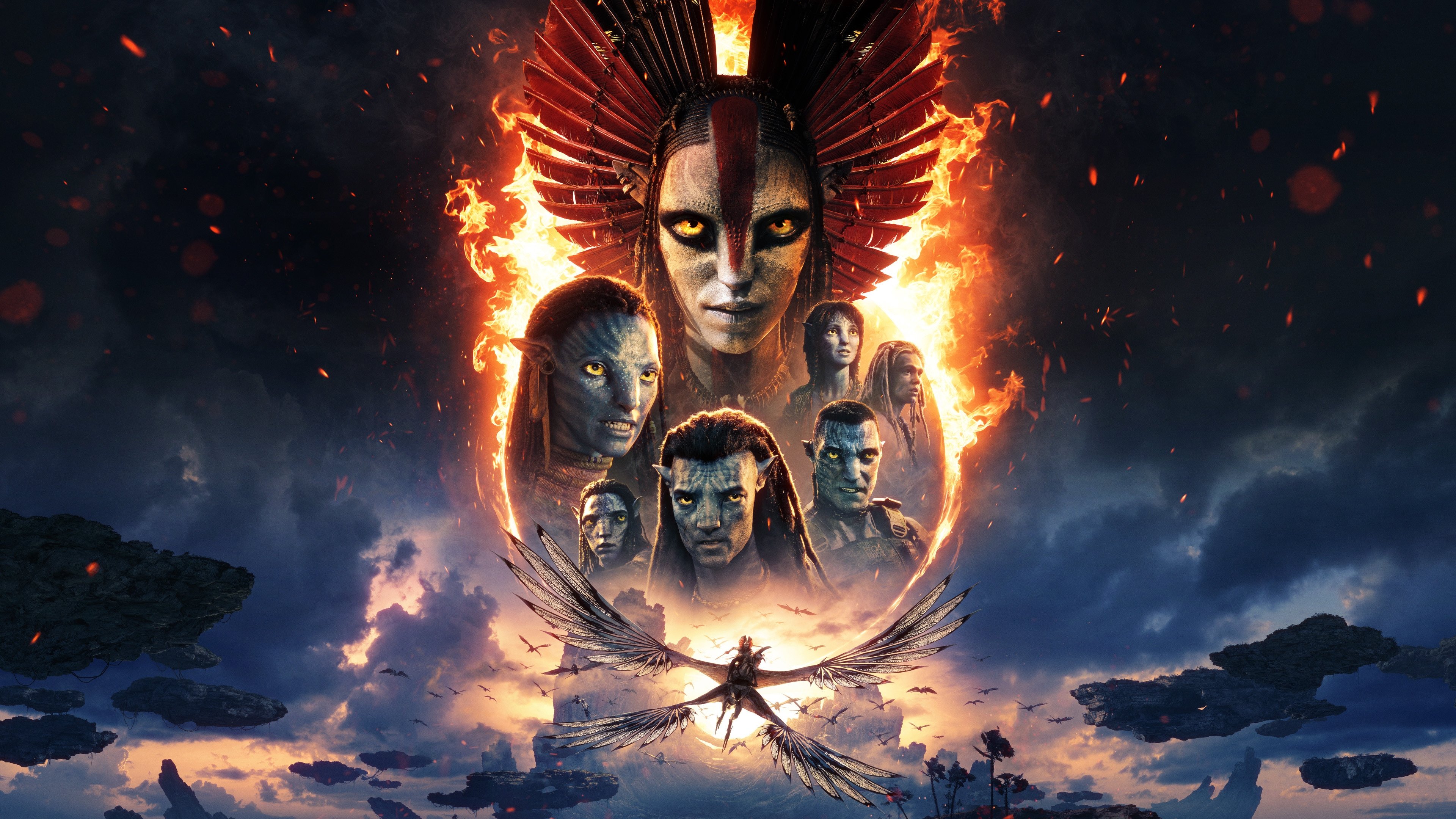
Avatar: Fire and Ash continues James Cameron’s long-running saga with a story that is both visually ambitious and emotionally heavier than the previous chapters. The film follows Jake Sully, Neytiri, and their family as they deal with the aftermath of Neteyam’s death while facing a new, formidable Na’vi group known as the Ash People. The tone is darker, the stakes are higher, and the world of Pandora expands into fiery, volcanic landscapes that give the film a distinct identity.
Visuals & World-Building
As expected from Cameron, the film is a technical marvel. The volcanic regions, ash-filled skies, and molten environments look stunning and feel entirely different from the ocean world introduced in The Way of Water. The action scenes are massive, detailed, and almost overwhelming in scale. It’s the kind of immersive filmmaking that demands a big screen.
Story & Emotional Weight
Where the film truly stands out is its emotional core. Grief, family tension, and moral conflict drive most of the narrative. Neytiri gets some of her most intense character moments in the entire franchise. Jake faces internal conflicts that challenge his leadership and identity. Even Quaritch — previously a straightforward villain — is given layers and an internal struggle that make him more interesting this time.
The story still follows the familiar Avatar formula: family bonds, environmental themes, and cultural clashes. But the execution feels tighter and more emotionally grounded than before.
Pacing & Structure
The runtime is long, and although the film rarely drags, some viewers may feel that certain sequences are designed more to showcase visual brilliance than to advance the story. Still, the emotional beats land effectively, and the momentum builds toward a powerful final act.
Overall Impression
Fire and Ash is the most dramatic and emotionally driven entry in the series so far. It doesn’t radically reinvent the franchise’s storytelling style, but it deepens the characters and widens the world in meaningful ways. The visuals are spectacular, the action is grand, and the family drama adds genuine heart.
If you enjoyed the previous films for their cinematic scale, this one delivers even more — with a darker, more mature tone.
Original title Avatar: Fire and Ash
IMDb Rating 9.4
Director

Director
Cast

Jake

Neytiri

Kiri

Quaritch

Varang

Ronal

Tonowari

Norm

Mo'at

General Ardmore
Similar titles
![Godzilla x Kong: The New Empire (2024) [Hindi Dubbed] – Movie Review](https://mlwbd.click/wp-content/uploads/2024/03/cQe6psskevi814rkFO65yOcv2vD-185x278.jpg)







![Hanu-Man (2024) [Hindi Dubbed] – Movie Review](https://mlwbd.click/wp-content/uploads/2024/01/59OS57SMDcU0yQ4ebg0gXhSE1Xu-185x278.jpg)